
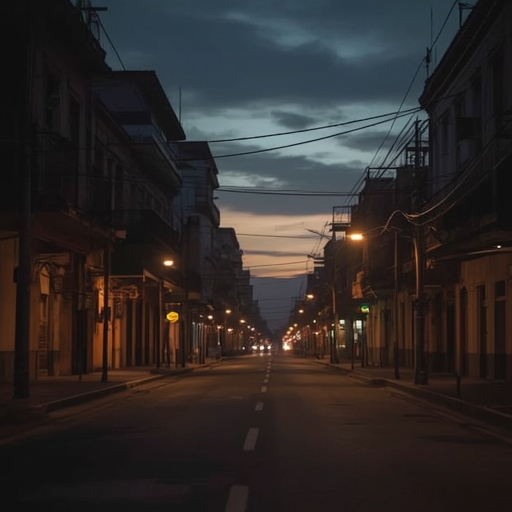
Fear has seeped into every corner of Culiacán, a city once known for its spirited energy and thriving culture but now overshadowed by an unrelenting wave of violence born from internal cartel rivalries. What was once a bustling urban center in northern Mexico has transformed into a landscape characterized by tension, suspicion, and pervasive dread. As the British Broadcasting Corporation’s international correspondent Quentin Sommerville reports, the conflict within the notorious Sinaloa cartel has turned daily life into a grim struggle for survival, where the ordinary rhythm of existence is disrupted by the echo of gunfire and the ever-present specter of death.
The catalyst for this current eruption of bloodshed lies in the turmoil following the downfall of Mexico’s most feared and elusive drug lord, Nemesio Oseguera Cervantes—better known as “El Mencho.” The president of Mexico publicly praised the elite special forces responsible for his capture and subsequent death in custody, viewing the episode as a critical victory in the national effort against drug trafficking. Yet, from the field in Sinaloa, the situation reveals a more troubling truth: the removal of a cartel figurehead, rather than heralding stability, often leads to chaos. Power vacuums within such transnational criminal organizations invite bitter feuds as splinter groups fight to claim territory, profit, and influence. In this fragile equilibrium, even a single arrest can ignite a violent reshuffling of power.
Sommerville’s team, accompanied by paramedics Julio César Vega and Héctor Torres, witnessed firsthand the brutal consequences of this conflict. Responding to yet another emergency call, they arrived at the scene of a fatal shooting, only to find a business owner dead on the spotless tiles of his garage office, his life extinguished by unknown assailants. His wife’s anguished cries filled the air as Torres swiftly confirmed there was no hope of saving him. Such tragedies, once sporadic, have now become an almost routine feature of the paramedics’ work. Over the last eighteen months, violence in Culiacán has intensified to unprecedented levels, with emergency callouts increasing by more than seventy percent. Nearly every call they attend concludes with the same devastating outcome: a lifeless body, grieving relatives, and lingering questions that will likely remain unanswered.
The roots of this struggle trace back to betrayal within the Sinaloa cartel itself. Once a seemingly cohesive and disciplined network under the leadership of figures such as Ismael “El Mayo” Zambada, the organization has fractured into warring factions following internal treachery among its members. Zambada’s eventual imprisonment in the United States deepened the instability, leaving loyalists and opportunists in open conflict. What was once described by insiders as a brotherhood—united by familial bonds and mutual profit—has devolved into a fratricidal war. Héctor Torres, reflecting on the disintegration, compared it to a family tearing itself apart at the seams, where those who once shared meals now trade bullets.
The stakes of this battle extend far beyond Mexico’s borders. The Sinaloa cartel’s empire was built upon the production and distribution of fentanyl, a synthetic opioid responsible for a devastating epidemic across the United States. The drug’s potency and profitability have made it the centerpiece of the cartel’s business, and its reach into American cities has drawn international condemnation. Former U.S. President Donald Trump denounced the cartel as a terrorist organization and even characterized fentanyl as a weapon of mass destruction, threatening to intervene militarily should Mexico fail to stem the flow. Yet despite the rhetoric, production continues virtually unabated.
In Culiacán, this climate of danger has forced even first responders like Torres and Vega to don body armor for their own survival. Their 14-kilogram protective gear is as vital as their medical instruments, shielding them from stray bullets as they race through streets patrolled by soldiers and littered with checkpoints. The sunset that once invited nightlife and celebration now signals retreat; as darkness falls, the city empties, residents barricading themselves indoors.
The violence has taken on macabre dimensions, often serving as a means of communication among rival groups. Tortured corpses are left in public spaces—gruesome messages carved into flesh—to terrify opponents and civilians alike. At one crime scene, an abandoned body bore chilling evidence of torture, accompanied by a written threat promising annihilation to other alleged traitors. Such displays turn city streets and manicured parks into open-air warnings, signaling the cartels’ dominance where state authority falters.
Journalists such as veteran reporter Ernesto Martínez have chronicled these horrors for decades. He recounts that despite an increased military presence, homicide rates remain stubbornly unchanged, hovering at five or six murders each day. The constant stream of deaths has numbed the collective conscience, creating a grim normality. In this environment, fear has become not an emotion but a way of life.
When Sommerville sought insight from members of one cartel faction themselves, the picture that emerged was even bleaker. Meeting under strict secrecy, the armed men expressed no remorse; one spoke with twisted pragmatism, arguing that the government should stand aside and allow the factions to exterminate each other until only one remained. Another, slightly more reflective, admitted that innocent lives were often lost—children among them—but suggested that such losses were inevitable collateral in a larger war for survival. Their words revealed the deep moral corrosion at the heart of this cycle, where killing has been normalized and human empathy eroded.
For the families left behind, the suffering does not end with death. The number of desaparecidos—the disappeared—continues to grow. Mothers like Reynalda Pulido have taken it upon themselves to search for the missing when institutions fail to do so. Leading a group called Mothers Fighting Back, she and her companions scour remote fields outside the city, shovels and pickaxes in hand, seeking the faintest traces of disturbed earth that might conceal human remains. Their white shirts, emblazoned with photos of lost sons and daughters, form a heartbreaking procession through rural landscapes guarded by armed escorts. Despite countless disappointments, Pulido persists, driven by an unbreakable maternal instinct. As she herself explains, a mother’s search never ends—each discovery, each recovered body, each unidentified life, becomes a fragment of her own lost child.
The ultimate engine behind this collective suffering remains fentanyl. Deep inside a cartel-operated laboratory, an anonymous producer—identified only as “Román”—prepares tightly wrapped packages of white powder destined for the U.S. market. He handles the deadly material with clinical precision and calm detachment, fully aware of its value and its victims. To him, the business is purely transactional; morality plays no role. Even as international authorities intensify their crackdown, he explains that production merely pauses, never ceasing, adjusting to government pressure like a living organism adapting to its environment. His rationalization is chilling in its simplicity: as long as there is demand, there will be supply. To Román, drug users are themselves responsible, voluntary participants in their own destruction.
From Culiacán, Sommerville later travels to Mexico City, where President Claudia Sheinbaum asserts that her administration is making progress in suppressing the trade. She attributes the surge in violence to internal power struggles among traffickers and insists her government aims to protect civilians above all else. Yet this official optimism stands in sharp contrast with the grim reality on the ground in Sinaloa, where paramedics like Héctor and Julio continue racing to scenes of carnage, often finding little more than hope slipping away beneath their trembling hands.
In one final call during Sommerville’s stay, the two paramedics responded to a downtown shooting, finding two wounded men gasping for life. They worked swiftly, fearfully aware that attackers often return to finish their work. Against the odds, both victims survived—the first they had saved in months. As they removed their bloodstained gloves and shared a quiet cigarette under the glow of police lights, Héctor remarked that these were the first survivors they had seen since November, a rare moment of fragile triumph amid relentless despair.
Thus, in the heart of Culiacán, where despair and determination coexist uneasily, life persists under siege. The city remains suspended between chaos and resilience, a stark reminder of humanity’s capacity to endure even when fear becomes the constant companion of everyday life.
Sourse: https://www.bbc.com/news/articles/cx2g3vmde0eo?at_medium=RSS&at_campaign=rss