
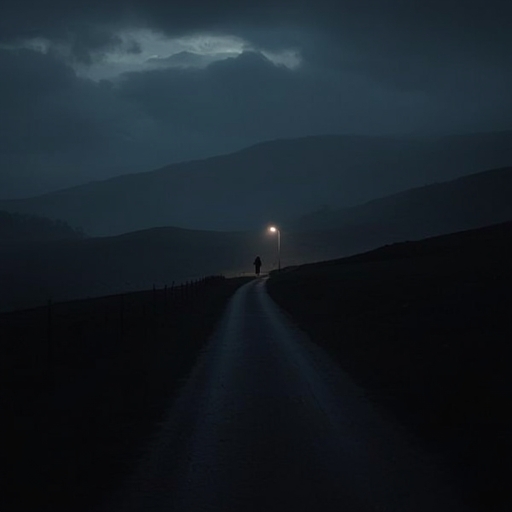
A dramatic conclusion has been reached in one of Scotland’s most unsettling and perplexing murder cases. David Campbell, a 77-year-old former gamekeeper once respected in his community, has been found guilty of the deliberate and calculated shooting of his former colleague, Brian Low, along a desolate country lane in Highland Perthshire. The fatal encounter occurred on Leafy Lane, near the quiet town of Aberfeldy, in February 2024. Before committing the crime, Campbell had methodically disabled a CCTV camera at his own home nearby, an action that prosecutors later argued was part of his attempt to conceal his movements and erase any trace of his involvement.
Initially, Brian Low’s tragic death did not appear to raise suspicion. When his body was discovered lying along the rural path, his loyal dog Millie still faithfully by his side, both the first attending police officer and the paramedic assumed that the 65-year-old retired groundsman had suffered a sudden medical collapse or perhaps a fatal fall while taking his morning walk. In the absence of any immediate evidence of foul play, investigators labeled the case “non-suspicious.” However, the quiet narrative of a natural death was abruptly shattered four days later when a shotgun pellet unexpectedly dropped out of the body bag as Low’s remains were being prepared for post-mortem examination. This revelation forced authorities to re-evaluate the entire situation, triggering a full-scale homicide inquiry.
Subsequent forensic examinations painted an alarming picture. Detailed analysis revealed that Low had sustained multiple shotgun wounds to his chest, arms, neck, and face. Tiny metallic pellets were embedded within his lung tissues, and his clothing bore numerous perforations consistent with a blast from a distance calculated between 19 and 45 meters. These findings indicated that the shooting was both deliberate and precise. Although the murder weapon itself was never recovered, investigators later matched pellets from the victim’s body with ammunition found in Campbell’s possession, further tightening the circle of evidence around him.
This discovery sent shockwaves through the close-knit Highland town. For weeks, members of the Aberfeldy community wrestled with fear, disbelief, and speculation. Local conversations were filled with bewilderment — people asked one another how it was possible that an apparent gunshot wound could have gone unrecognized for several days. As police initiated raids, press conferences, and days of coordinated action, more than 800 witnesses were interviewed, and approximately 2,400 hours of CCTV footage from 56 separate cameras were meticulously reviewed. Despite these extensive measures, progress initially seemed slow and opaque, adding to the town’s anxiety.
Eventually, suspicion began to focus increasingly on David Campbell, a man widely regarded as complex and unpredictable. Those who had known him through his decades-long career at the Edradynate Estate — where he worked alongside Brian Low for nearly 20 years — often described him as a ‘Jekyll and Hyde’ figure. On some days, he was genial, disciplined, and professional, yet at other times, capable of flashes of cold hostility or unsettling aggression. Tension between the two men had reportedly existed for years, stemming from disputes involving alleged bird poisonings on the estate. Campbell had even accused Low of ‘planting’ incriminating material during a previous raid, deepening the rift between them.
Campbell’s darker temperament was not a recent development. Nearly three decades earlier, in 1995, retired police inspector and wildlife crime coordinator Alan Stewart had recalled an encounter with him that revealed a threatening undertone. At a game fair that summer, Campbell passed Stewart in an aisle and sneered, making a chilling remark implying violence — a phrase that, in retrospect, foreshadowed the hostility he would later direct toward Low.
Evidence presented during the 15-day trial in the High Court at Glasgow demonstrated that Campbell had taken deliberate steps to obscure his role both before and after the killing. Early on the morning of the crime, he was seen covering a doorbell camera at his property with duct tape, effectively blinding any potential electronic witness. Footage showed him glancing upward at another security camera moments later, after which the recording ceased for nearly twelve hours. Investigators also discovered that Low’s mobile phone recorded no further movement after mid-afternoon that day, suggesting the time frame in which the shooting likely occurred. Meanwhile, nearby CCTV images captured a cyclist near Campbell’s residence shortly before the weapon was fired. Although Campbell denied being that cyclist — and even claimed that changing his bicycle tires afterward was nothing more than a romantic gesture for his wife — the jury considered this another attempt to obscure incriminating details.
On 24 May 2024, after months of tense investigation, responding officers converged on Campbell’s property in Aberfeldy. They found him inside his home and arrested him under somewhat humiliating circumstances, as he was discovered unclothed in his bathroom. News of the arrest spread rapidly, reigniting gossip and hidden fears within the community. While some residents expressed lingering unease, others voiced relief that justice might finally be approaching. One local woman encapsulated public sentiment succinctly, stating that she would never have wanted to be alone in a room with Campbell.
During the trial, Campbell maintained his innocence, asserting that he had spent the afternoon of the murder at home after visiting one of his other properties in the morning, and denying any recent contact with Low since 2017. He also insisted he did not even know that his former co-worker had retired from the estate until seeing it on television. Yet, after examining the pattern of evidence and inconsistencies in his explanations, the jury ultimately returned a verdict of guilty, concluding that he had intentionally killed Brian Low and then attempted to evade responsibility.
For the community of Aberfeldy, the verdict closes a macabre chapter that had cast a shadow of suspicion over the region for months. Former detective and local councillor John Duff described Campbell as a man of dual nature — capable of warmth and charm one moment, but revealing a far more menacing side the next. Duff acknowledged that several previous incidents had contributed to raising local suspicion toward Campbell, though he emphasized that few had truly believed he was capable of murder until now. While the case exposed procedural lapses within the initial police response — understandable in light of the lack of visible gunshot wounds — it also underscored the inherent unpredictability of violence hidden within seemingly ordinary lives. In Duff’s words, no one expects that a neighbor out walking his dog on a tranquil Scottish path might be the victim of a cold-blooded shooting.
The case of David Campbell and Brian Low stands as a grim testament to the fragility of trust in small communities and to the mask of civility that can sometimes conceal profound darkness. Although the verdict offers a measure of justice and closure, it will likely be remembered for years as a tragedy that unsettled both conscience and community, reminding residents that even serenity can harbor secrets too dark to imagine.
Sourse: https://www.bbc.com/news/articles/c39w187jkj1o?at_medium=RSS&at_campaign=rss